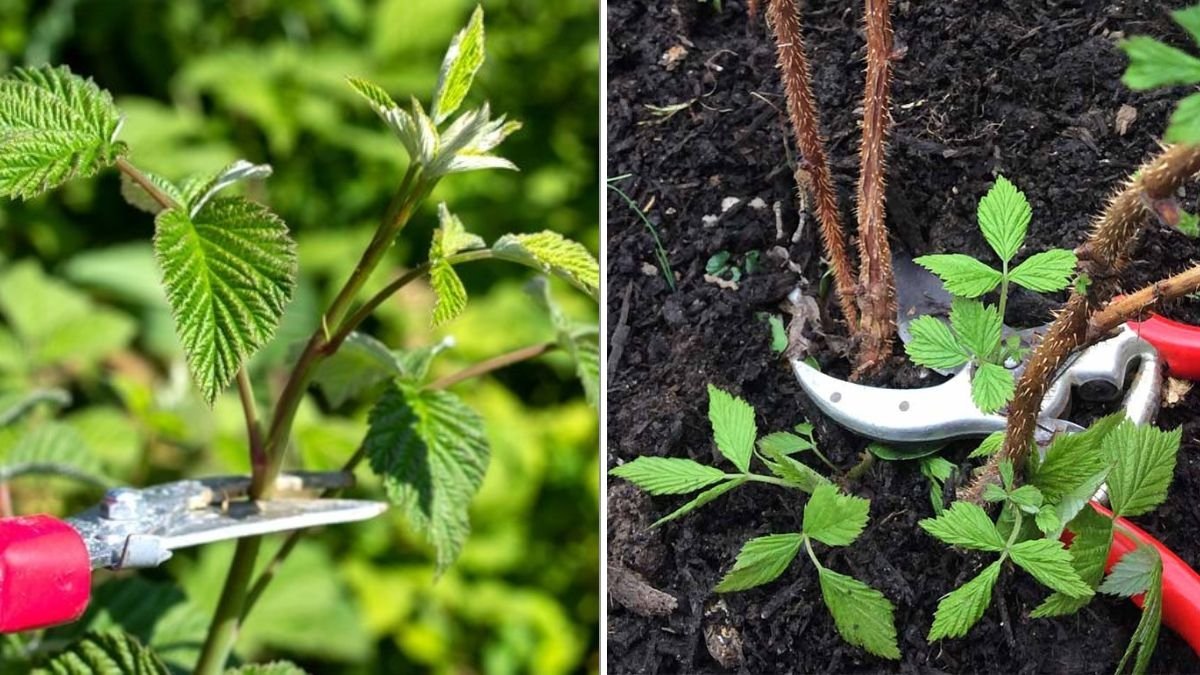
Raspberries are one of the most rewarding berries to grow at home—sweet, tangy, and bursting with flavor. But if you’ve ever wondered why your harvests seem smaller each year or why your raspberry patch looks more tangled than thriving, the answer is likely simple: it’s time to prune.
Pruning raspberry bushes isn’t just about tidying up your garden; it’s about ensuring healthier plants, larger berries, and more abundant harvests. With the right technique and timing, your raspberries will reward you with plump, juicy fruit season after season.
Here’s your complete, easy-to-follow guide on when and how to prune raspberry bushes for better yields.
Why Pruning Is Essential For Raspberry Plants
Raspberry plants are naturally vigorous. They send up new canes (stems) each year, and without proper management, they quickly form dense thickets.
Here’s what happens if you don’t prune:
- Old, unproductive canes steal nutrients from new growth.
- Crowded canes block sunlight and air circulation.
- Poor airflow increases the risk of diseases like cane blight and powdery mildew.
- Smaller, less flavorful berries develop due to competition.
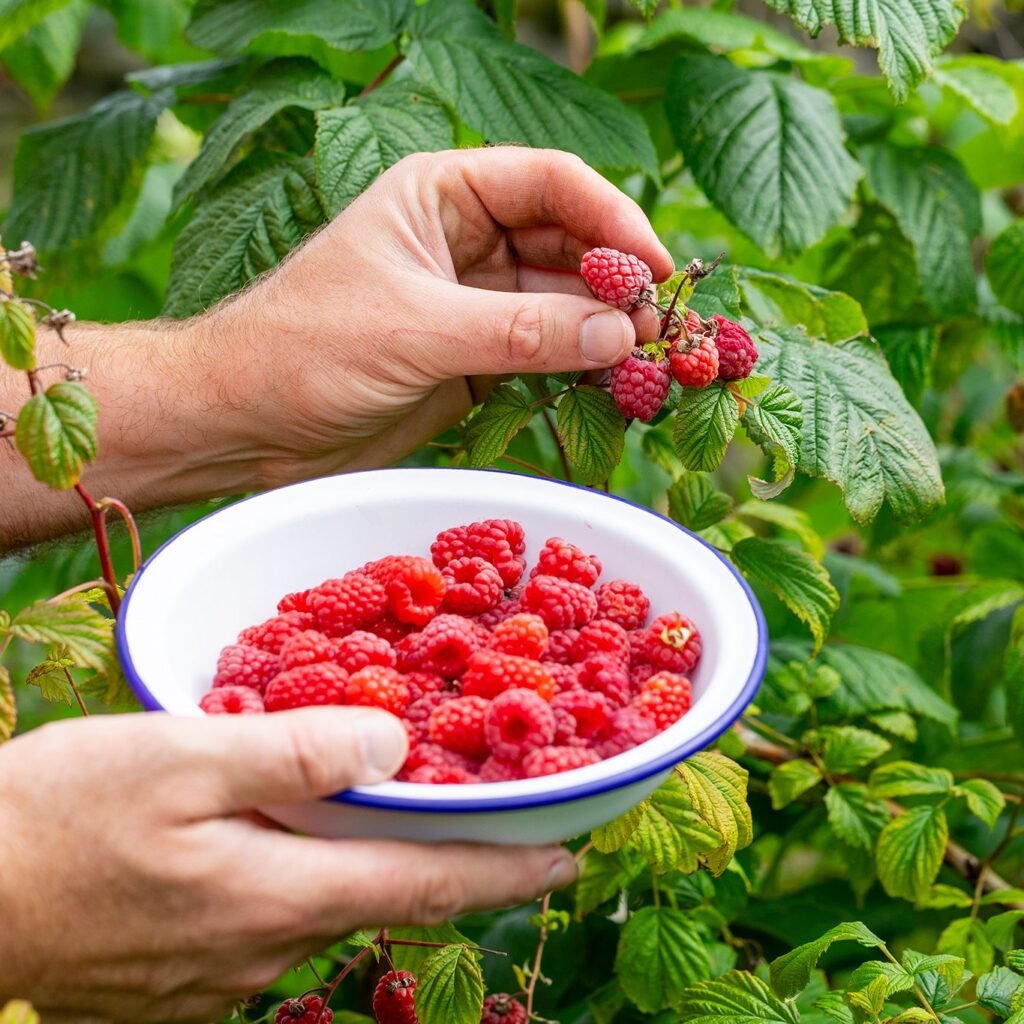
Regular pruning keeps your raspberry patch healthy and productive. It encourages strong new canes that produce abundant fruit and makes harvesting easier and cleaner.
Understanding Raspberry Growth: Summer-Bearing vs. Ever-Bearing
Before you grab your pruning shears, it’s important to identify which type of raspberries you have—because pruning times differ dramatically.
1. Summer-Bearing Raspberries
- Produce fruit once per year, typically in early to mid-summer.
- Berries grow on second-year canes called floricanes.
- First-year canes (primocanes) grow vegetatively, then fruit the following year.
Example varieties: ‘Latham’, ‘Boyne’, ‘Willamette’, and ‘Killarney’.

2. Ever-Bearing (Fall-Bearing) Raspberries
- Also known as primocane-bearing varieties.
- Produce fruit twice per year—a small crop in early summer and a main crop in late summer to fall.
- Fruit grows directly on the current year’s canes.
Example varieties: ‘Heritage’, ‘Caroline’, ‘Autumn Bliss’, and ‘Anne’.
Step 1: Gather the Right Tools
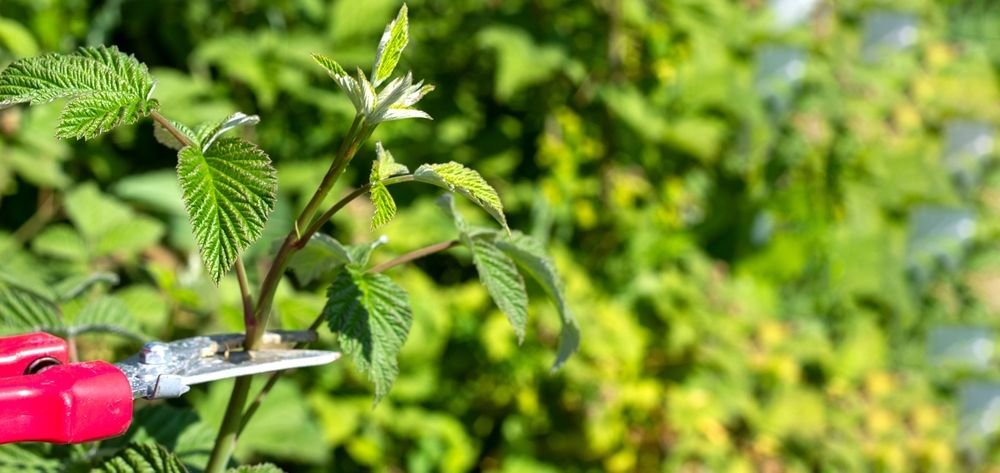
Good pruning starts with the right gear:
- Sharp pruning shears or loppers (clean cuts prevent disease).
- Gardening gloves (raspberry canes are thorny).
- Disinfectant (wipe blades with alcohol between cuts).
Step 2: Know the Right Time to Prune
Timing is crucial. Prune too early, and you may remove canes that will fruit soon. Prune too late, and you’ll miss the chance to shape growth for next season.
For Summer-Bearing Raspberries:
1. After Harvest (Mid to Late Summer):
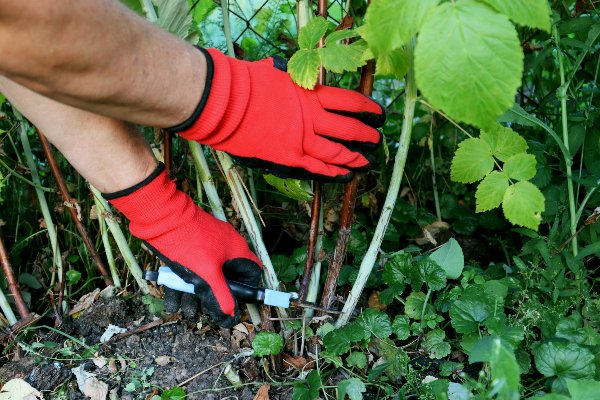
- As soon as fruiting is over, remove all canes that produced berries.
- These are old, woody, and will never bear again.
- Cut them at ground level—don’t leave stubs.
2. Late Winter or Early Spring:
- Before new growth begins, thin out the remaining canes.
- Keep the sturdier, younger first-year canes (primocanes) that will bear this season.
- Aim for 4–6 canes per foot of row.
This two-step process rejuvenates your patch and encourages strong fruiting canes for the next year.
For Ever-Bearing Raspberries:
You have two options depending on whether you want one large harvest or two smaller ones:
Option 1: One Large Fall Harvest (Simplest Method)

- In late winter or early spring, cut all canes down to the ground.
- New canes will sprout in spring and produce a single, heavy crop in late summer or fall.
- This method keeps things tidy and disease-free.
Option 2: Two Harvests (More Involved)
- After the fall harvest, cut back only the portion of each cane that fruited (top third).
- These same canes will produce again on the lower sections in early summer next year.
- After the summer harvest, remove those canes completely to make room for new growth.
Tip: Many home gardeners prefer the one-harvest method—it’s easier and still yields plenty of fruit.
Step 3: How To Prune Effectively
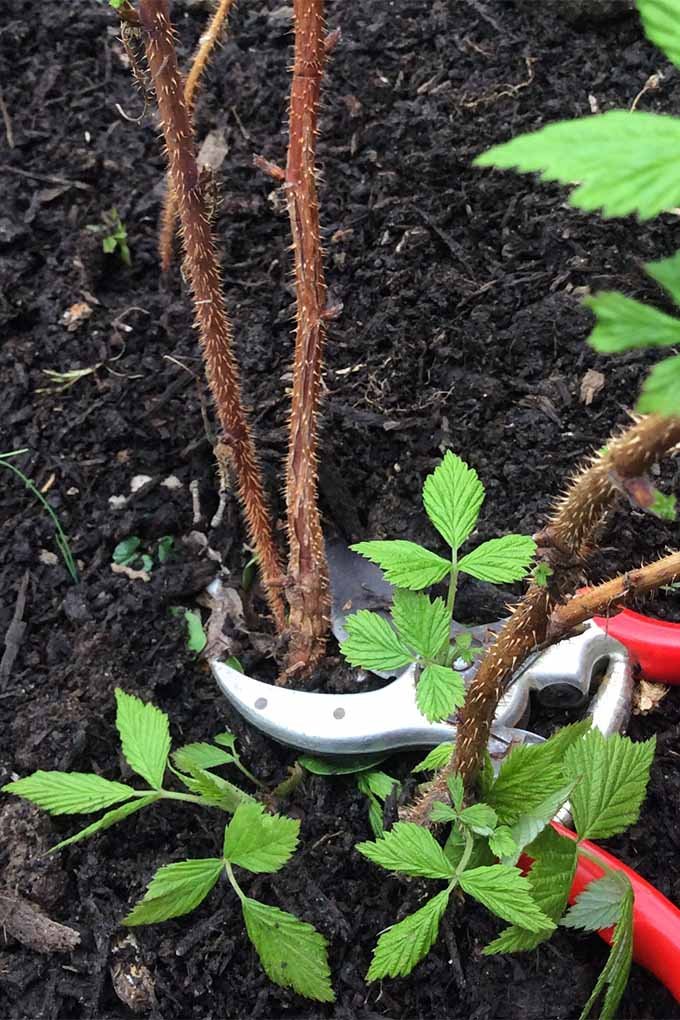
Now that you know when to prune, let’s look at how to do it right.
1. Remove Old, Dead, or Diseased Canes
Cut them at soil level. These canes are brown, woody, and brittle. Removing them prevents disease and opens space for new canes.
2. Thin the Patch
Overcrowding is the biggest cause of reduced yield. Aim for a spacing of:
- 6 inches between canes within rows.
- 2–3 feet between rows.
Keep only the strongest, healthiest canes—usually the thickest and greenest.
3. Trim the Tops (Optional)
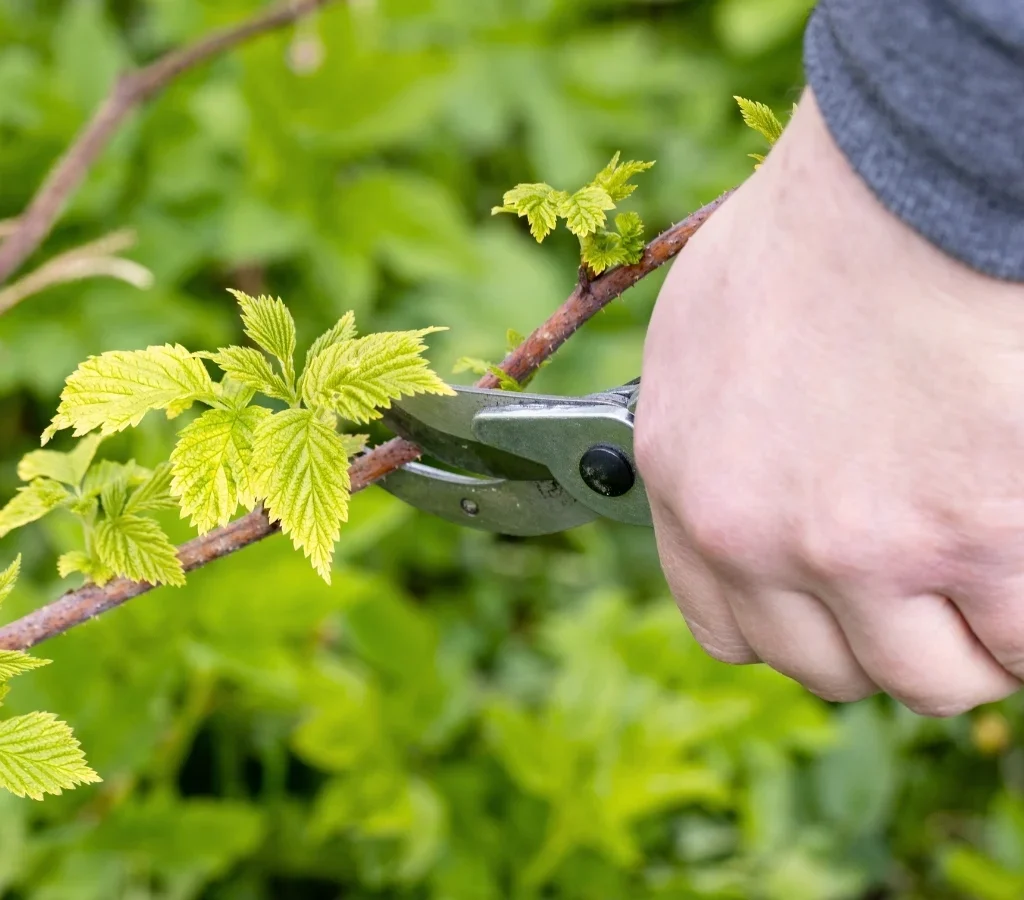
In early spring, you can trim the top 6 inches of healthy canes to encourage branching.
More side branches = more fruiting tips.
4. Train Canes on a Trellis or Wires
Raspberry canes benefit from gentle support:

- Use stakes, wires, or a T-trellis system to keep canes upright.
- Tie canes loosely with garden twine or clips.
Proper support prevents bending, improves airflow, and makes picking easier.
Bonus: A well-trained raspberry patch looks neat, organized, and far more productive.
Step 4: Mulch and Maintain After Pruning
After pruning, your plants will redirect energy toward new growth. Help them recover with proper care.
1. Apply Compost or Fertilizer
- Add a 2-inch layer of compost or use a balanced fertilizer (10-10-10) in early spring.
- This boosts soil nutrients and promotes vigorous cane growth.
2. Mulch the Base
- Spread straw, pine needles, or wood chips around the base to retain moisture and suppress weeds.
- Keep mulch an inch away from the stems to prevent rot.
3. Water Deeply but Infrequently
- Raspberries prefer moist but not soggy soil.
- Water deeply once or twice a week during dry spells.
4. Watch for Suckers
- Raspberries spread by underground shoots. Remove excess suckers that appear outside your planting area to prevent overcrowding.
Step 5: Yearly Raspberry Pruning Calendar
Here’s a quick summary to keep your pruning schedule simple:

| Season | Summer-Bearing Raspberries | Ever-Bearing Raspberries |
|---|---|---|
| Late Summer (Post-Harvest) | Remove spent canes completely | Optional: Remove fruited tops |
| Late Winter/Early Spring | Thin out weak canes, keep strongest | Cut all canes to ground (for one crop) |
| During Growing Season | Light trimming for shape | Remove dead/diseased canes anytime |
Following this schedule ensures your plants stay vigorous, manageable, and productive year after year.
Step 6: Pruning for Health and Disease Prevention
Beyond yield, pruning keeps your raspberry patch disease-free.
Common issues prevented by pruning:
- Cane Blight: Fungal infection spread by crowded, damp conditions.
- Anthracnose: Gray spots and weak stems caused by poor airflow.
- Botrytis (Gray Mold): Affects ripening fruit when humidity is high.
Regular pruning improves air circulation and sunlight exposure—two natural disease fighters.
Step 7: Extra Tips for Maximum Yield
- Keep Rows Narrow: Rows no wider than 18 inches make harvesting and maintenance easier.
- Rotate Mulch Each Year: Fresh mulch keeps weeds down and improves soil texture.
- Feed Mid-Season: Apply a light dose of fertilizer in mid-summer after pruning to boost next year’s cane growth.
- Train New Canes: Tie new canes as they grow to prevent damage from wind.
- Be Patient: The best yields come when your plants reach their second or third year of growth and are properly managed.
Step 8: Rejuvenating an Overgrown Raspberry Patch
If you’ve inherited an old or neglected patch, don’t worry—it can be revived.
Here’s how:
- In late winter, cut all canes to the ground.
- In spring, allow new canes to emerge.
- When they reach 12–18 inches, thin out weaker shoots, leaving 4–6 strong canes per clump.
- Fertilize, mulch, and water regularly.
By next season, your raspberry bed will be healthy and fruiting again.
Final Thoughts
Pruning raspberries may sound intimidating at first, but it’s one of the simplest and most rewarding garden tasks once you understand your plant’s growth cycle. Think of it as a yearly reset—removing what’s old to make space for what’s new.

When done correctly and at the right time, pruning gives your plants everything they need to produce larger, sweeter, and more plentiful berries. It keeps your patch neat, healthy, and bursting with fruit year after year.
So, grab your gloves and shears, step into the garden, and give those canes a trim. A few careful cuts today will lead to baskets of juicy raspberries tomorrow—and the satisfaction of knowing you grew them to perfection.

Leave A Comment