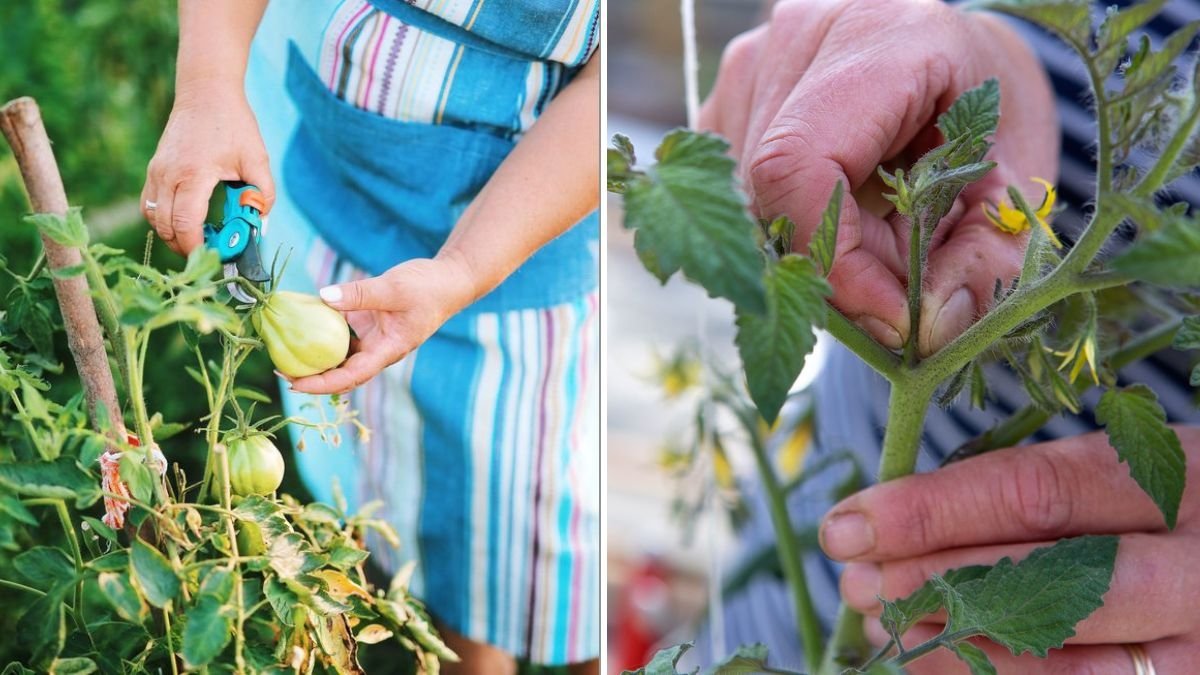
Tomatoes are one of the most rewarding crops to grow—but they can also be among the most demanding. If you’ve ever looked at your tomato plants and wondered why they’re sprawling everywhere but not producing much fruit, pruning may be the missing link.
Pruning is more than just trimming—it’s about helping your plant focus its energy on producing fewer but bigger, juicier, and tastier tomatoes. Done right, it improves airflow, prevents disease, and maximizes sunlight exposure—all key factors for a successful harvest.
In this detailed guide, you’ll learn why pruning matters, when and how to do it, and which mistakes to avoid to get the best results.
Why Pruning Tomato Plants Matters
Many gardeners hesitate to prune, fearing they’ll harm their plants. But pruning tomatoes isn’t just cosmetic—it directly impacts growth and yield.
Here’s what proper pruning does:
- Improves air circulation: Reduces the risk of fungal diseases like blight and mildew.
- Encourages fruit growth: The plant diverts energy from excess foliage to fruit production.
- Enhances sunlight exposure: Allows lower leaves and fruits to receive adequate light.
- Reduces pest problems: Less dense foliage means fewer hiding spots for pests.
- Keeps plants manageable: Easier to stake, tie, and harvest without tangles.
Simply put, pruning helps create a healthier plant that produces more flavorful, high-quality tomatoes instead of a jungle of leaves.

Know Your Tomato Type Before Pruning
Before picking up your shears, identify whether your tomato variety is determinate or indeterminate, because their pruning needs differ.
1. Determinate Tomatoes (Bush Type)
- Grow to a fixed size (usually 3–4 feet tall).
- Produce fruit all at once.
- Prune minimally—just remove dead or diseased leaves.
- Over-pruning can reduce yield because fruit forms on a set number of stems.
Examples: Roma, Celebrity, Patio Princess.
2. Indeterminate Tomatoes (Vining Type)
- Continue growing and producing fruit all season.
- Require regular pruning to control size and improve yield.
- Benefit most from training and staking systems.
Examples: Brandywine, Cherokee Purple, Beefsteak, Sungold.
If your goal is continuous harvest and larger fruits, indeterminate varieties respond best to structured pruning.
When To Start Pruning Tomato Plants
Timing is crucial. Start pruning once your tomato plant is about 12–18 inches tall and has begun to develop its first flower cluster.
Key moments to prune:

- Early season: Shape the plant as it grows.
- Midseason: Maintain airflow and remove suckers.
- Late season: Remove excess growth to speed up ripening.
Avoid heavy pruning during very hot, sunny days, as it may expose fruits to sunscald. Early morning or evening is ideal for trimming.
The Anatomy of a Tomato Plant (Know What to Cut)
Understanding where and what to prune helps avoid accidental damage.
Here are the main parts you’ll work with:
- Main stem: The central leader of the plant.
- Leaves: Essential for photosynthesis—don’t remove too many.
- Flower clusters: Future tomatoes—never cut these!
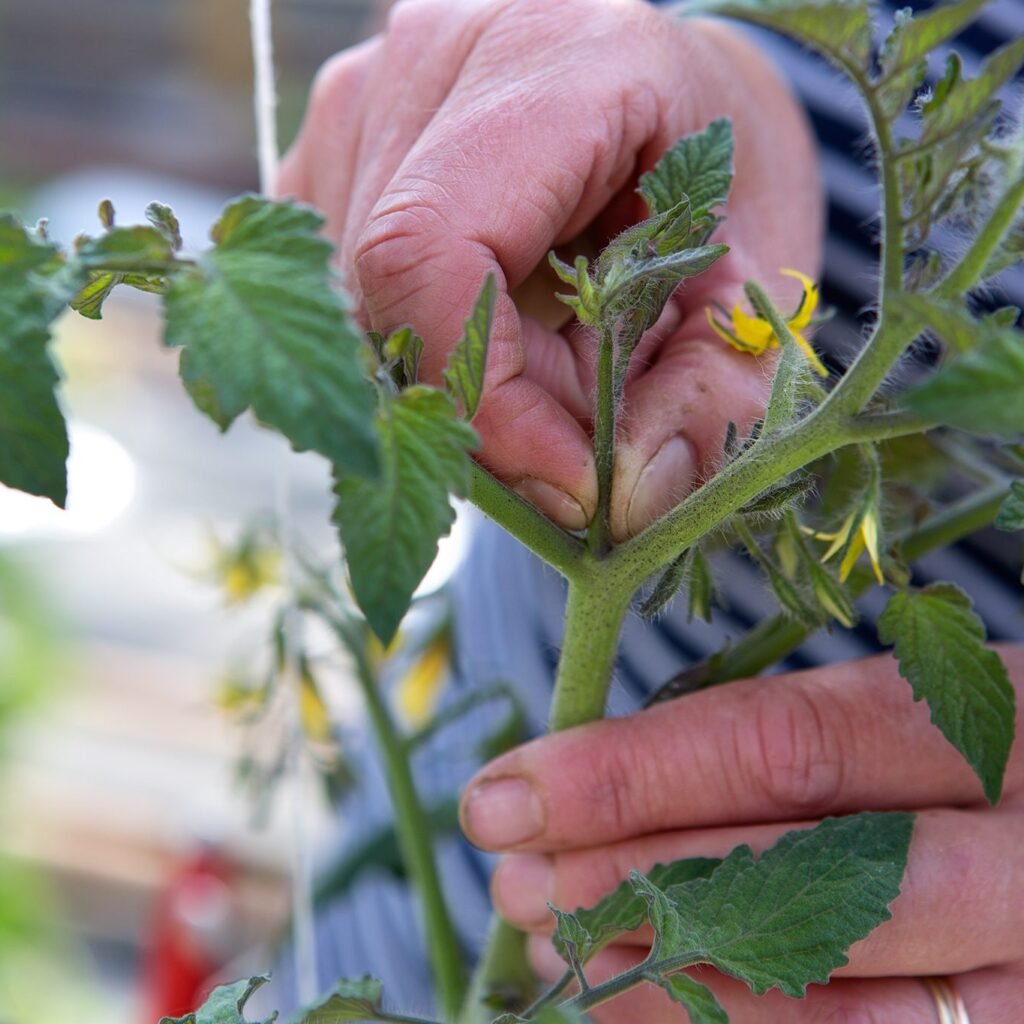
- Suckers: The small shoots that grow in the joint between a stem and a leaf branch.
Suckers are the primary focus when pruning tomatoes.
Step-by-Step Guide: How To Prune Tomatoes Properly
Step 1: Gather Your Tools
You’ll need:
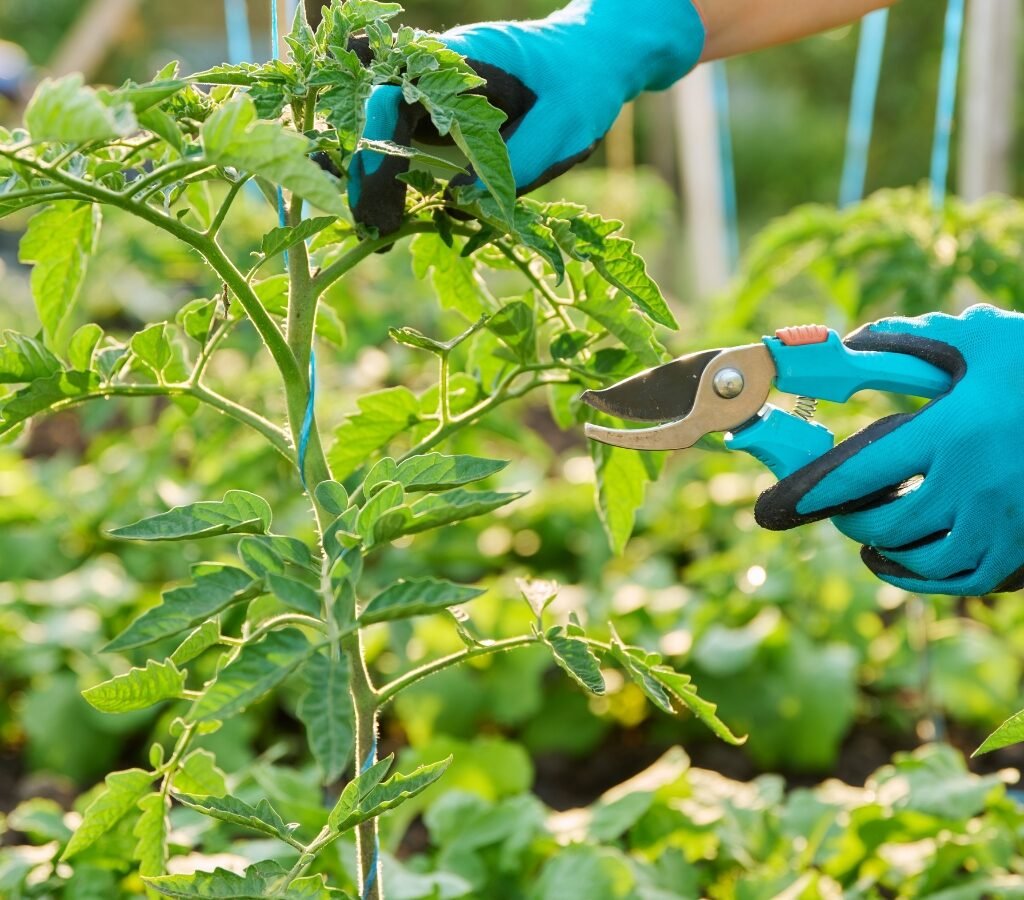
- Sharp pruning shears or scissors.
- Gloves.
- Sanitizing spray (like diluted rubbing alcohol) to prevent disease spread.
Clean your tools before and after pruning—tomatoes are prone to fungal infections that spread easily through cuts.

Step 2: Remove the Bottom Leaves
Once your plant reaches about 18 inches tall, remove the bottom 6–12 inches of leaves. These lower leaves are closest to the soil, where moisture and disease spores linger.
- Use clean shears to snip them off.
- Do not tear leaves by hand—it can damage stems.
- This step greatly reduces the risk of early blight and soil-borne diseases.
Step 3: Identify and Remove Suckers
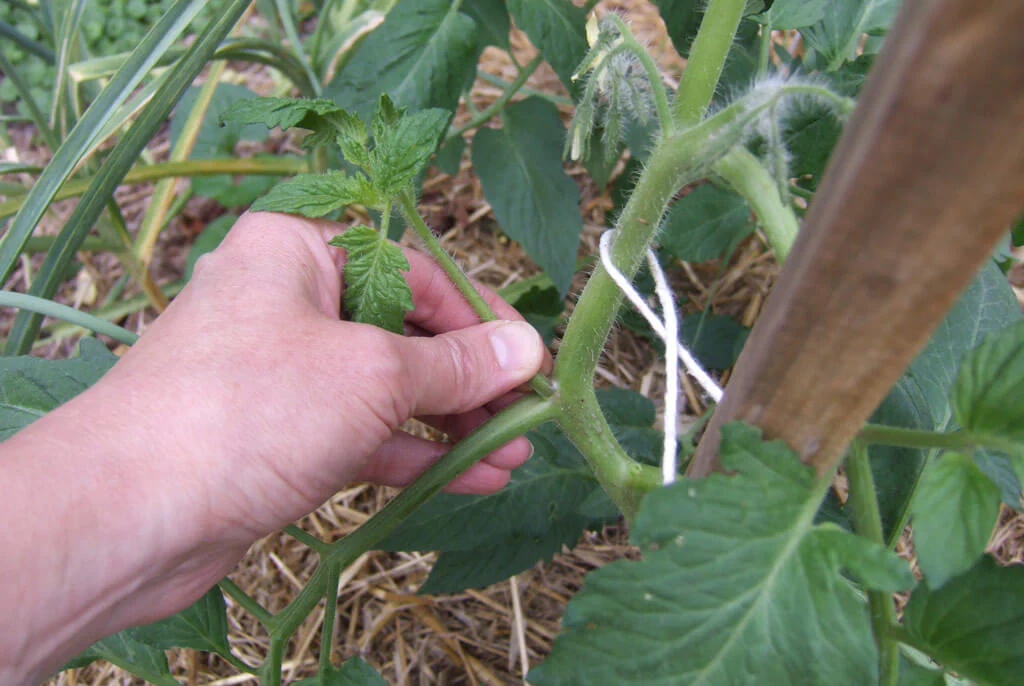
Suckers are the small shoots growing in the “V” between a main stem and a branch.
Why remove them:
Left unchecked, suckers turn into full stems that compete for nutrients and create dense foliage.
How to remove them:
- Pinch them off with your fingers when they’re 2–3 inches long.
- For larger suckers, use sterilized pruning shears.
- Leave one or two main stems depending on your training system.
Tip: If your goal is maximum fruit size, prune more aggressively (keeping one main stem). For higher quantity, leave two stems.
Step 4: Thin Out Dense Growth
As the plant grows, remove leaves that block sunlight from reaching the interior.

- Focus on the middle section where airflow gets restricted.
- Always keep at least 60% of the foliage intact—tomatoes need leaves for photosynthesis.
- Avoid stripping too many at once to prevent sunburned fruits.
This “selective thinning” helps light reach ripening tomatoes while reducing disease risk.
Step 5: Top the Plant (End-of-Season Pruning)

In late summer (about 4 weeks before the first expected frost), you can top your tomato plants to encourage ripening of existing fruit.
- Cut off the main stem just above the last cluster of developing fruit.
- This redirects the plant’s energy from producing new flowers to ripening existing tomatoes.
Result? A sweeter, fuller harvest before cold weather hits.
Pruning Techniques for Different Setups
1. Single-Stem Pruning (For Vertical Growth)
- Ideal for small spaces or when using cages, stakes, or trellises.
- Keep only one main stem.
- Remove all suckers and side shoots.
- Produces fewer but larger, juicier fruits.
2. Double-Stem Pruning
- Leave one sucker just below the first flower cluster to grow as a secondary stem.
- Offers a balance between fruit size and total yield.
- Easier to manage than multi-stem plants.
3. Minimal Pruning (For Busy Gardeners)
- Remove only the bottom leaves and diseased or crowded branches.
- Best for bush-type (determinate) tomatoes.
Pro Tips for Effective Tomato Pruning
- Never prune wet plants: Moisture spreads fungal diseases like wildfire.
- Sanitize tools regularly: A quick wipe with alcohol prevents contamination.
- Mulch after pruning: It keeps the soil from splashing onto lower stems and retains moisture.
- Don’t over-prune: Too few leaves mean less energy for fruit development.
- Train as you prune: Tie vines gently to stakes or cages as they grow.
- Observe your plants: Some varieties naturally grow more compactly; prune according to their growth habit.
Common Pruning Mistakes to Avoid
Even experienced gardeners make these errors:
- Over-pruning: Cutting too much foliage at once stresses plants and exposes fruit to sunscald.
- Ignoring suckers for too long: Once large, they divert major nutrients from fruiting branches.
- Pruning too late: Early pruning (before flowering) gives better results.
- Neglecting airflow: Dense growth encourages fungal issues like leaf spot and mold.
- Cutting above flower clusters: Always prune below or beside them to avoid losing fruiting potential.
Aftercare: Helping Plants Recover
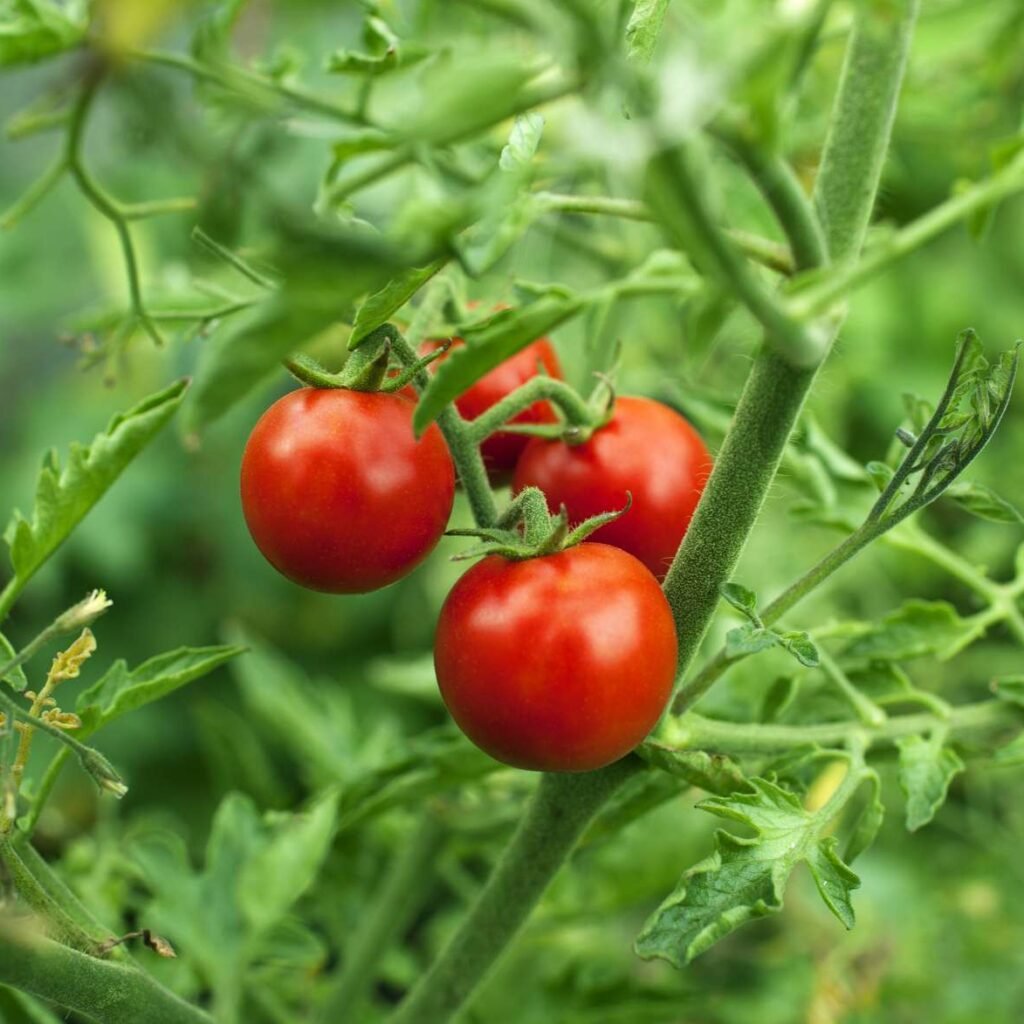
Pruning slightly stresses your tomato plants, so help them bounce back quickly:
- Water deeply after pruning.
- Feed lightly with compost tea or diluted seaweed extract to replenish nutrients.
- Mulch around the base to conserve moisture and stabilize soil temperature.
- Monitor for pests—open spaces may temporarily attract them until new growth appears.
Within a few days, you’ll notice sturdier stems and stronger flower clusters.

Final Thoughts
Pruning tomato plants is both an art and a science. It’s about guiding growth, not restricting it. By removing the right leaves and suckers at the right time, you allow your plants to focus on what truly matters—producing bigger, juicier, and more flavorful tomatoes.
Think of each snip as a way to redirect your plant’s energy toward abundance. Combine smart pruning with proper watering, feeding, and staking, and your tomato patch will reward you with a bumper crop of sun-ripened perfection.
Remember: a well-pruned tomato plant isn’t just healthier—it’s happier, more productive, and a joy to harvest from all season long.

Leave A Comment