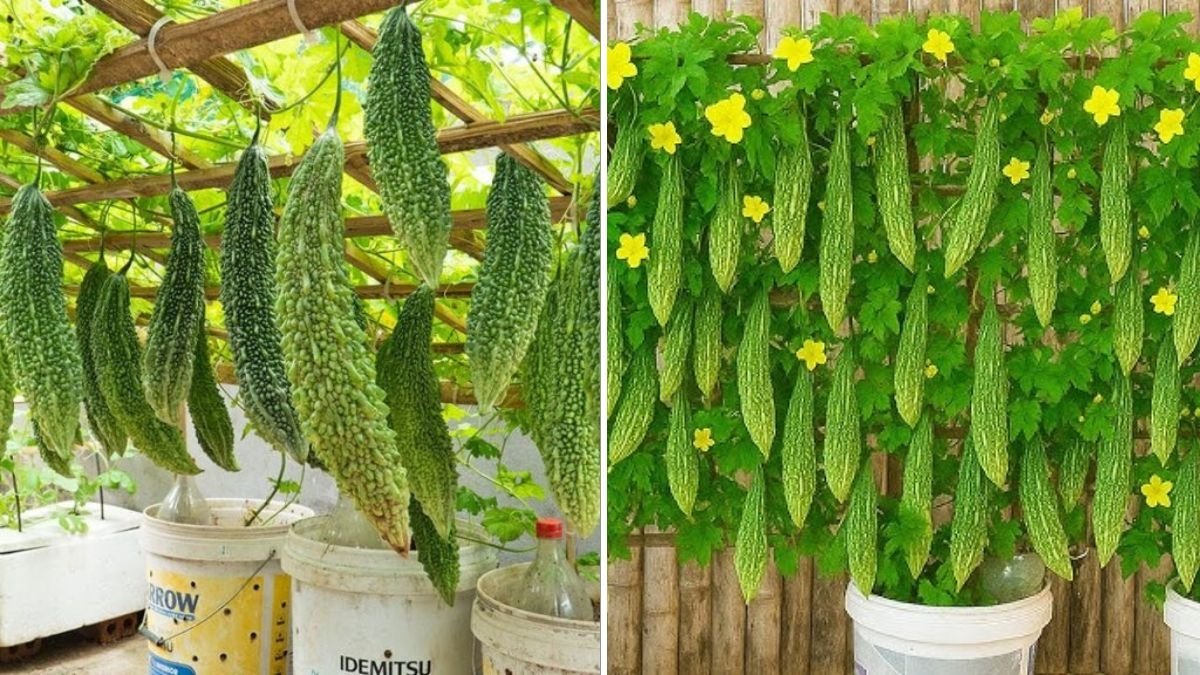
Bitter melon, also known as bitter gourd or karela, is a powerhouse vegetable prized for its medicinal benefits and unique flavor. Packed with vitamins, antioxidants, and compounds that support blood sugar management, it’s a favorite in American and international kitchens alike.
Growing bitter melon at home doesn’t require a backyard garden — with plastic tubs, you can cultivate this nutritious vegetable efficiently and harvest a super high yield. This method is perfect for urban gardeners, apartment dwellers, and beginners looking for fast, productive growth.
In this guide, you’ll learn everything from selecting seeds and preparing tubs to planting, supporting, fertilizing, and harvesting bitter melon successfully. By the end, you’ll be ready to enjoy fresh, homegrown bitter melons all season long.
1. Why Grow Bitter Melon in Plastic Tubs?
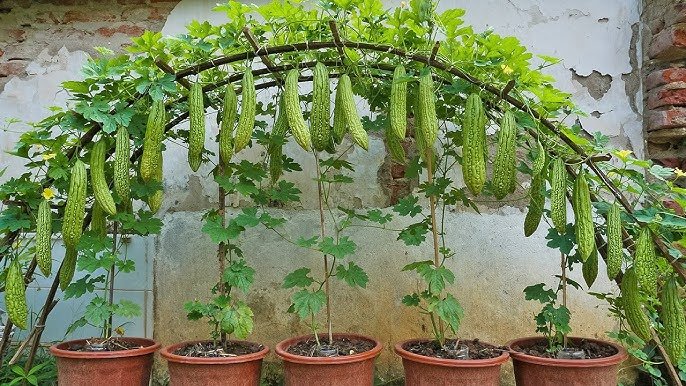
Bitter melon is a vigorous vine that can produce abundant fruit with proper care. Using plastic tubs offers several advantages:
Benefits of Tub Gardening:
- Space-efficient: Ideal for patios, balconies, and small yards.
- High yield: Large tub volume encourages strong vine growth and fruiting.
- Mobility: Move tubs to catch sunlight or avoid harsh weather.
- Control over soil and nutrients: Prevent soil-borne diseases and pests.
- Beginner-friendly: Simple setup with minimal tools required.
Plastic tubs allow for excellent drainage, aeration, and root expansion, leading to faster growth and bigger harvests compared to traditional pots.
2. Choosing the Right Bitter Melon Variety
Not all bitter melon varieties perform equally well in containers. For plastic tubs, compact and high-yielding varieties work best.
Popular Varieties for Tub Gardening:
- Indian Bitter Melon (Karela): Smooth, elongated, and fast-growing.
- Chinese Bitter Melon: Lighter green, slightly sweeter, high-yielding.
- Hybrid Varieties: Developed for container growth, disease resistance, and high production.
Pro Tip: If your goal is continuous harvest, choose early-maturing or hybrid varieties that produce multiple fruits per vine.
3. Materials You’ll Need
You don’t need a full garden bed to grow bitter melon. Here’s what you’ll need:
Materials List:
- Plastic tubs (minimum 15–20 gallons)
- Potting soil or garden soil mixed with compost
- Organic compost or vermicompost
- Bitter melon seeds
- Trellis, bamboo sticks, or netting for vine support
- Watering can or spray bottle
- Optional: Mulch to retain soil moisture
Tip: Reuse large plastic storage tubs or detergent containers for a budget-friendly setup. Ensure they have drainage holes at the bottom.
4. Preparing Plastic Tubs
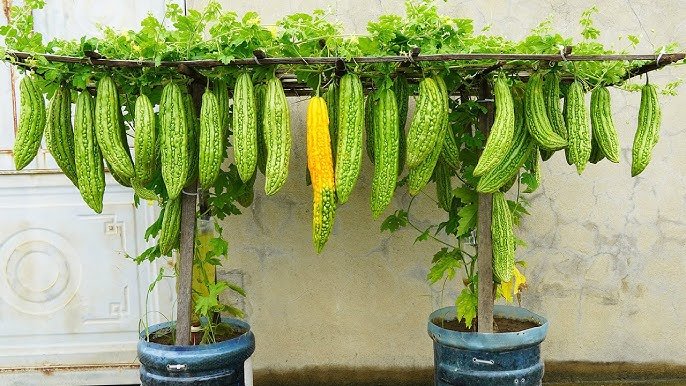
Proper tub preparation ensures healthy root development and prevents waterlogging.
Step-by-Step Preparation:
- Drill 4–6 drainage holes at the bottom of each tub.
- Fill the tub ¾ full with a well-draining soil mix.
- Lightly water the soil to moisten it.
- Position tubs in a sunny location with at least 6–8 hours of sunlight daily.
Pro Tip: If using large vining varieties, leave room around the tub for vines to climb.
5. Preparing the Soil Mix
Bitter melon thrives in loose, fertile soil rich in organic matter.
Ideal Soil Mix:
- 50% potting soil
- 30% compost or organic manure
- 20% perlite or sand for drainage
Soil pH: 6.0–6.5 (slightly acidic to neutral)
Tip: Adding bone meal or slow-release fertilizer promotes flowering and fruiting.
6. Planting Bitter Melon Seeds
Bitter melon seeds can germinate quickly if planted properly.
Step 1: Pre-Soak Seeds
- Soak seeds in water for 24 hours to soften the hard seed coat.
- Optional: Scratch the seed coat lightly to improve germination.
Step 2: Plant Seeds in Tub
- Sow 2–3 seeds per tub, 1 inch deep.
- Cover lightly with soil and water gently.
- Germination occurs in 7–10 days under warm conditions.
Step 3: Thinning Seedlings
- Once seedlings emerge, thin to 1–2 strong plants per tub to ensure maximum growth.
Pro Tip: Keep the soil consistently moist but avoid waterlogging.
7. Providing Support for Vines
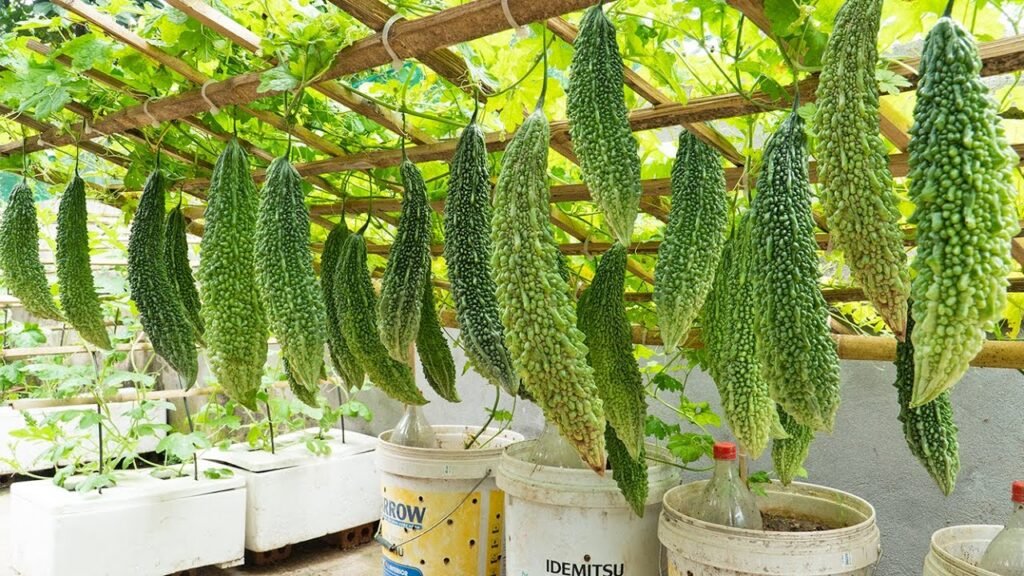
Bitter melon is a climbing vine and requires vertical support to maximize fruit production.
Support Options:
- Trellis or bamboo sticks
- Netting or fencing for the vine to climb
- Tie vines loosely with soft string or twine
Tip: Keeping the vine off the soil prevents rot, reduces pests, and improves air circulation.
8. Watering and Moisture Management
Consistent watering is key for fast growth and high yield.
Watering Guidelines:
- Water deeply 2–3 times per week or whenever the top inch of soil feels dry.
- Water at the base of the plant to prevent leaf fungal diseases.
- Mulch around the base to retain moisture and reduce evaporation.
9. Fertilizing Bitter Melon
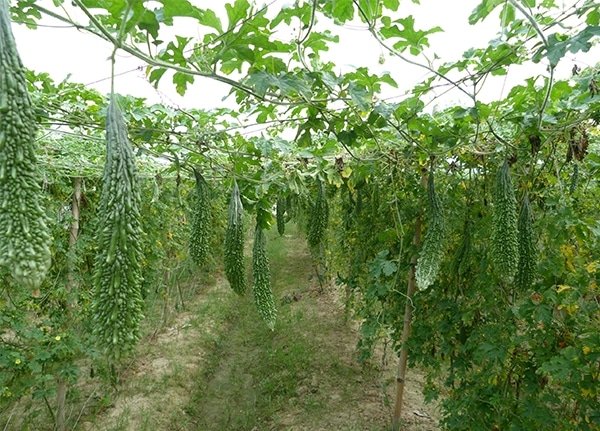
Container-grown bitter melon relies entirely on your care for nutrients.
Feeding Schedule:
- At planting: Mix compost or slow-release fertilizer into the soil.
- After 3–4 weeks: Feed with a balanced liquid fertilizer every 2 weeks.
- During flowering and fruiting: Switch to a fertilizer rich in phosphorus and potassium to boost flower and fruit production.
Tip: Organic options like fish emulsion, banana peel fertilizer, or compost tea work exceptionally well.
10. Pollination: Ensuring Fruit Production
Bitter melon produces male and female flowers. Pollination is required for fruit set.
Pollination Tips:
- Outdoors, bees and insects usually handle pollination.
- Indoors or low-bee areas: hand-pollinate using a small brush or cotton swab.
- Transfer pollen from male to female flowers gently.
11. Common Pests and Problems
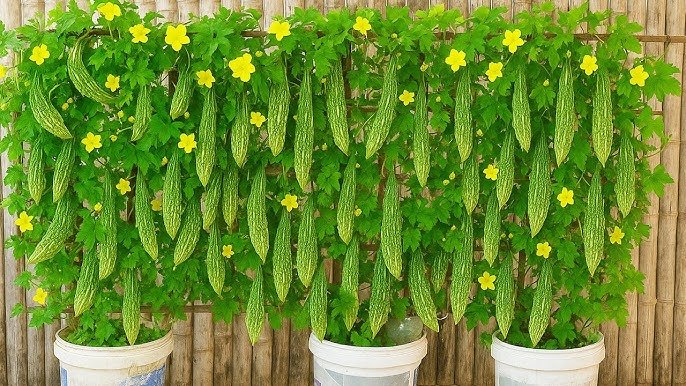
Even in tubs, bitter melon can face pests and diseases.
Common Issues:
- Aphids and whiteflies: Spray with neem oil or insecticidal soap.
- Powdery mildew: Avoid overhead watering and improve air circulation.
- Yellow leaves: Could indicate nutrient deficiency or overwatering.
Pro Tip: Inspect plants regularly and remove any diseased leaves promptly.
12. Harvesting Bitter Melon
Bitter melon grows quickly — from planting to harvest usually takes 50–70 days, depending on variety.
How to Harvest:
- Pick fruits when they are bright green and firm (before turning yellow).
- Regular harvesting encourages more flowers and fruits.
- Use scissors or gently twist off fruits to avoid damaging the vine.
Tip: Leaving fruits too long reduces yield and flavor.
13. Maximizing Yield in Plastic Tubs
- Grow one strong plant per tub to allow adequate root expansion.
- Use vertical trellises to save space and prevent vine damage.
- Mulch and feed regularly for larger, healthier fruits.
- Consider planting staggered batches to enjoy continuous harvests.
14. Fun Fact: Bitter Melon’s Health Benefits
Bitter melon is rich in vitamins C, A, and B-complex, and contains compounds that may help control blood sugar and boost immunity. Growing it at home ensures fresh, chemical-free vegetables right at your doorstep.
15. Conclusion: Fast, High-Yield Bitter Melon Gardening
Growing bitter melon in plastic tubs is a brilliant, beginner-friendly method for urban gardeners. It’s space-efficient, cost-effective, and highly productive, making it perfect for American homes with limited outdoor space.
With a few plastic tubs, good soil, seeds, and proper care, you can enjoy fresh, crisp, and nutritious bitter melons all season. This method not only maximizes yield but also gives you healthy, homegrown produce without a full garden.
Start your tub garden today and experience the satisfaction of harvesting bitter melon at home — fresh, organic, and completely yours!

Leave A Comment