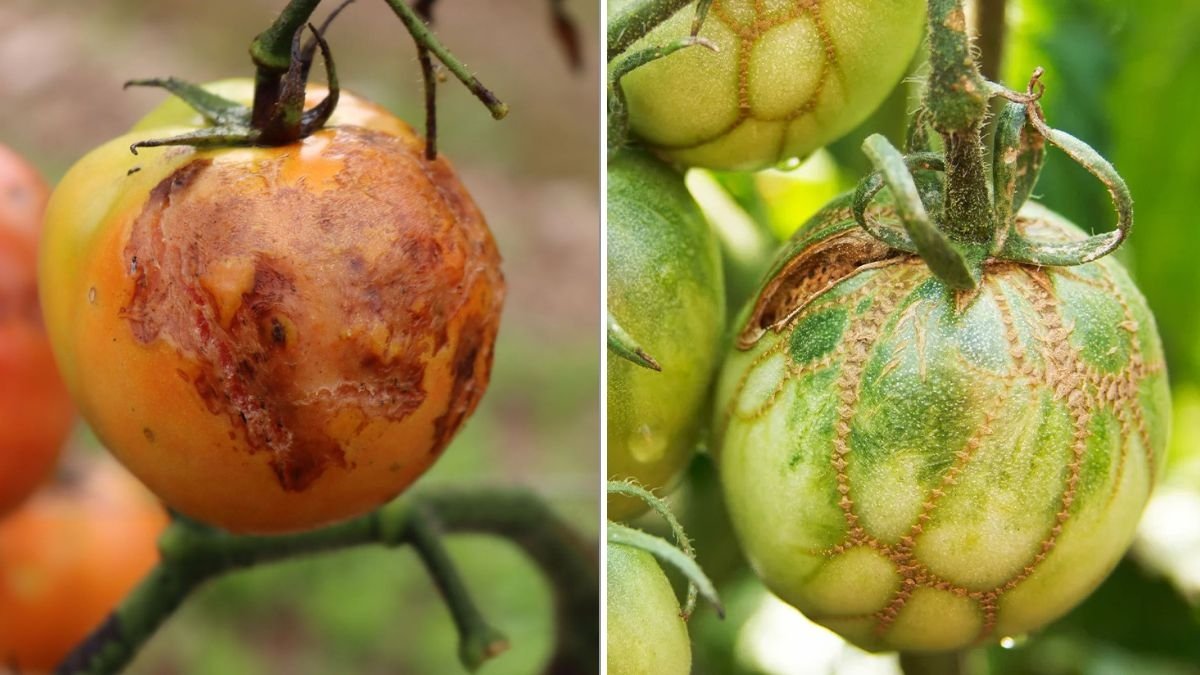
Tomatoes are the crown jewel of any home garden—lush, flavorful, and incredibly rewarding to grow. But every tomato grower eventually faces the heartbreak of discovering black spots, yellowing leaves, or stunted plants. These are signs of tomato diseases, many of which can spread quickly and devastate your crop if not managed early.
The good news? You don’t need harsh chemicals to save your tomatoes. With natural and organic methods, you can treat and prevent most tomato diseases while keeping your garden ecosystem healthy.
Here’s a detailed guide to the 10 most common tomato diseases—what causes them, how to recognize the symptoms, and how to treat them naturally.
1. Early Blight (Alternaria solani)
Symptoms:
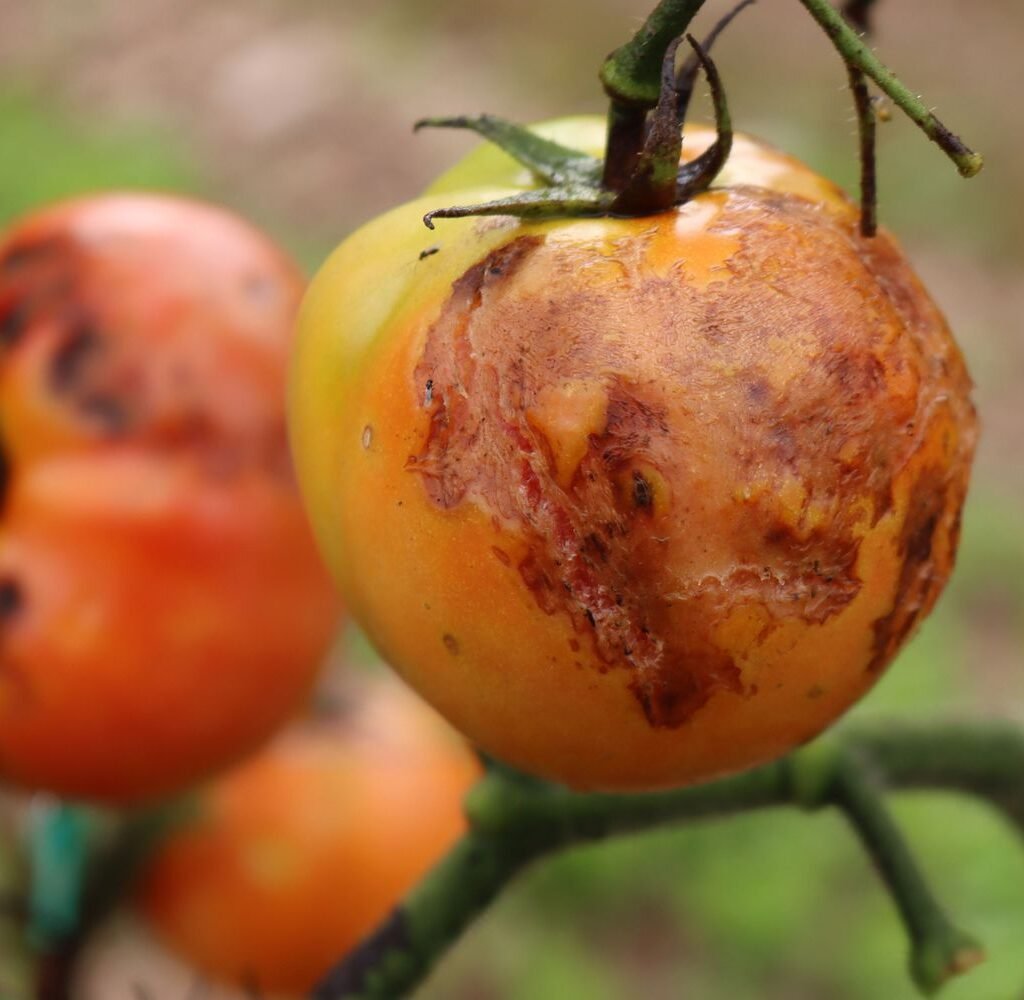
- Dark brown or black spots with concentric rings on lower leaves.
- Leaves yellow and drop off as the disease progresses.
- Fruit may develop sunken, leathery patches near the stem.
Cause:
A fungal disease that thrives in warm, humid conditions and spreads through soil or splashing water.
Natural Treatments:
- Neem oil spray: Mix 2 teaspoons of neem oil with 1 liter of water and spray every 7–10 days.
- Prune infected leaves: Dispose of them away from the garden (don’t compost).
- Mulch heavily: Prevents soil-borne spores from splashing onto leaves.
- Rotate crops: Avoid planting tomatoes or potatoes in the same spot for 2–3 years.
2. Late Blight (Phytophthora infestans)
Symptoms:
- Irregular gray or dark patches on leaves and stems.
- Leaves develop white fuzzy mold on undersides in humid weather.
- Fruits show greasy, dark, firm spots that spread rapidly.
Cause:
A highly destructive fungal-like pathogen responsible for the Irish potato famine, thriving in cool, moist conditions.
Natural Treatments:
- Remove affected parts immediately.
- Spray with copper fungicide (OMRI-approved organic formula).
- Increase airflow: Stake plants and prune lower branches.
- Avoid overhead watering to keep foliage dry.
- Plant resistant varieties like Mountain Magic or Defiant PhR.
3. Septoria Leaf Spot (Septoria lycopersici)
Symptoms:
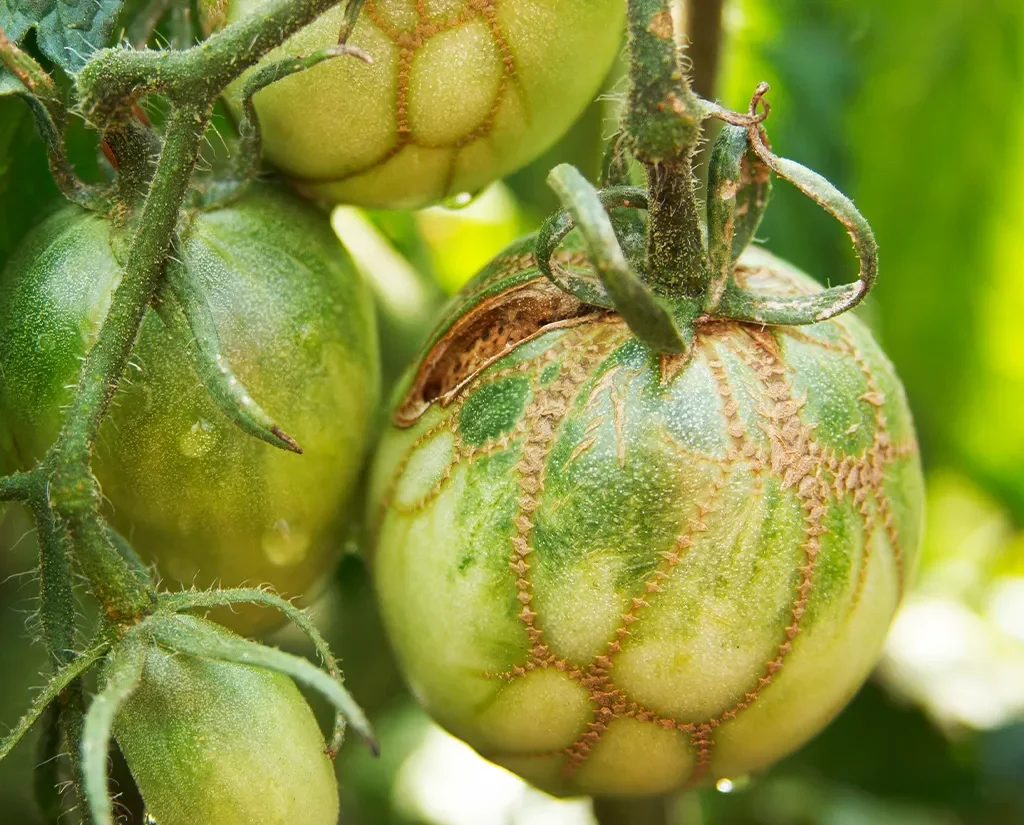
- Tiny, circular gray spots with dark borders on older leaves.
- Rapid yellowing and leaf drop from the bottom up.
- Fruit remains mostly unaffected but loses vigor due to defoliation.
Cause:
A fungus that survives on infected plant debris in the soil.
Natural Treatments:
- Remove infected leaves as soon as spots appear.
- Apply a baking soda spray: Mix 1 tablespoon of baking soda, 1 teaspoon of mild soap, and 1 gallon of water.
- Use drip irrigation to keep leaves dry.
- Mulch and rotate crops annually.
4. Fusarium Wilt (Fusarium oxysporum)
Symptoms:
- Yellowing begins on one side of the plant or a single branch.
- Leaves wilt during the day and recover at night—eventually, they stay wilted.
- Brown streaks visible inside stems when cut open.
Cause:
A soil-borne fungus that blocks water transport inside the plant, thriving in warm climates.
Natural Treatments:
- Plant resistant varieties: Look for “F” or “FF” after the tomato name (e.g., Better Boy F1).
- Solarize soil: Cover the garden bed with clear plastic for 4–6 weeks during peak summer to kill fungal spores.
- Add compost and beneficial microbes: Improves soil health and suppresses pathogens.
- Rotate crops: Avoid nightshade family plants for 3 years.
5. Verticillium Wilt (Verticillium albo-atrum)
Symptoms:
- Yellow “V-shaped” marks at leaf edges.
- Wilting begins with lower leaves and moves upward.
- Slower progression than fusarium wilt but equally damaging.
Cause:
Another soil-borne fungus, active in cooler conditions than Fusarium.
Natural Treatments:
- Crop rotation and soil solarization as above.
- Boost soil biology: Add mycorrhizal fungi or compost tea to outcompete pathogens.
- Remove and destroy infected plants to prevent spread.
- Grow resistant varieties: Celebrity and Big Beef are good options.
6. Bacterial Spot (Xanthomonas campestris)
Symptoms:
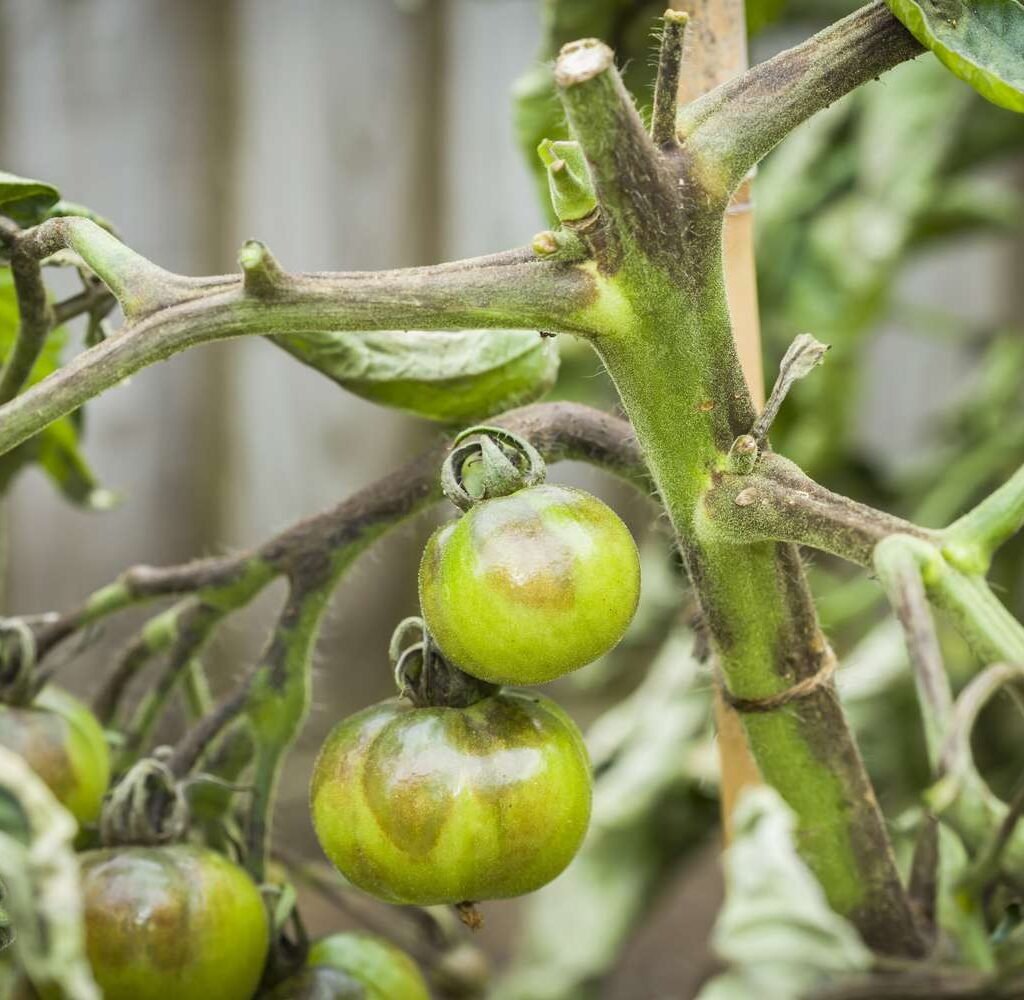
- Tiny, dark, greasy-looking spots on leaves and fruits.
- Leaves may turn yellow, curl, and drop prematurely.
- Fruit spots are scabby and unsightly, reducing quality.
Cause:
Spread by contaminated seeds, splashing rain, or handling wet plants.
Natural Treatments:
- Use disease-free seeds or treat seeds in hot water (122°F/50°C for 25 minutes).
- Apply copper-based organic sprays at the first sign of symptoms.
- Avoid touching plants when leaves are wet.
- Mulch and space plants properly for airflow.
7. Bacterial Canker (Clavibacter michiganensis)
Symptoms:
- Wilting and browning from the base upward.
- Leaves curl inward and develop “bird’s-eye” spots (white centers, dark margins) on fruit.
- Stems ooze yellowish sap when cut.
Cause:
A serious bacterial infection that spreads quickly through pruning tools or water.
Natural Treatments:
- Disinfect tools with a 10% bleach solution between plants.
- Remove infected plants immediately—do not compost them.
- Improve drainage to prevent bacterial growth.
- Spray neem oil or copper soap weekly during humid conditions.
8. Tomato Mosaic Virus (ToMV)
Symptoms:
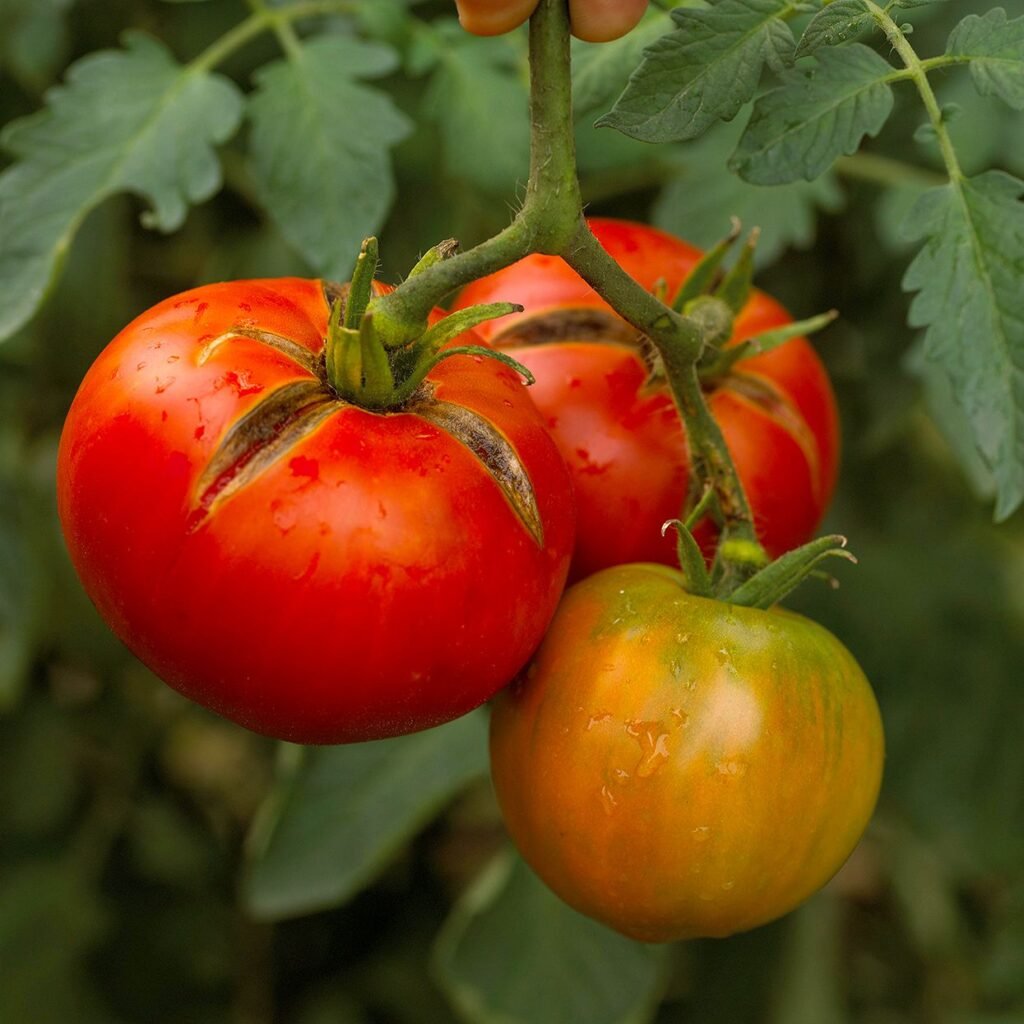
- Mottled, mosaic-like yellow and green patches on leaves.
- Leaf curling and distortion.
- Smaller, hardened fruits with uneven ripening.
Cause:
A viral disease spread by contaminated hands, tools, or even tobacco products.
Natural Treatments:
- No chemical cure—focus on prevention.
- Wash hands and tools before handling plants.
- Remove and destroy infected plants immediately.
- Disinfect stakes and cages with 10% bleach.
- Grow resistant varieties such as Celebrity or Better Boy.
Pro Tip: Avoid smoking near plants—tobacco can carry the virus!
9. Blossom End Rot
Symptoms:
- Dark, sunken spots on the bottom (blossom end) of tomatoes.
- Spots enlarge and turn leathery as fruit grows.
- Leaves remain healthy, making it easy to mistake for a disease.
Cause:
A physiological disorder—not infectious—caused by calcium deficiency due to inconsistent watering or root stress.
Natural Treatments:
- Maintain even watering: Don’t let soil dry out between sessions.
- Add crushed eggshells or bone meal to soil before planting.
- Mulch heavily to regulate moisture.
- Spray calcium solution: Mix 1 tablespoon of calcium nitrate per liter of water and apply to leaves weekly.
Prevention: Healthy soil rich in organic matter helps stabilize calcium availability.
10. Powdery Mildew
Symptoms:
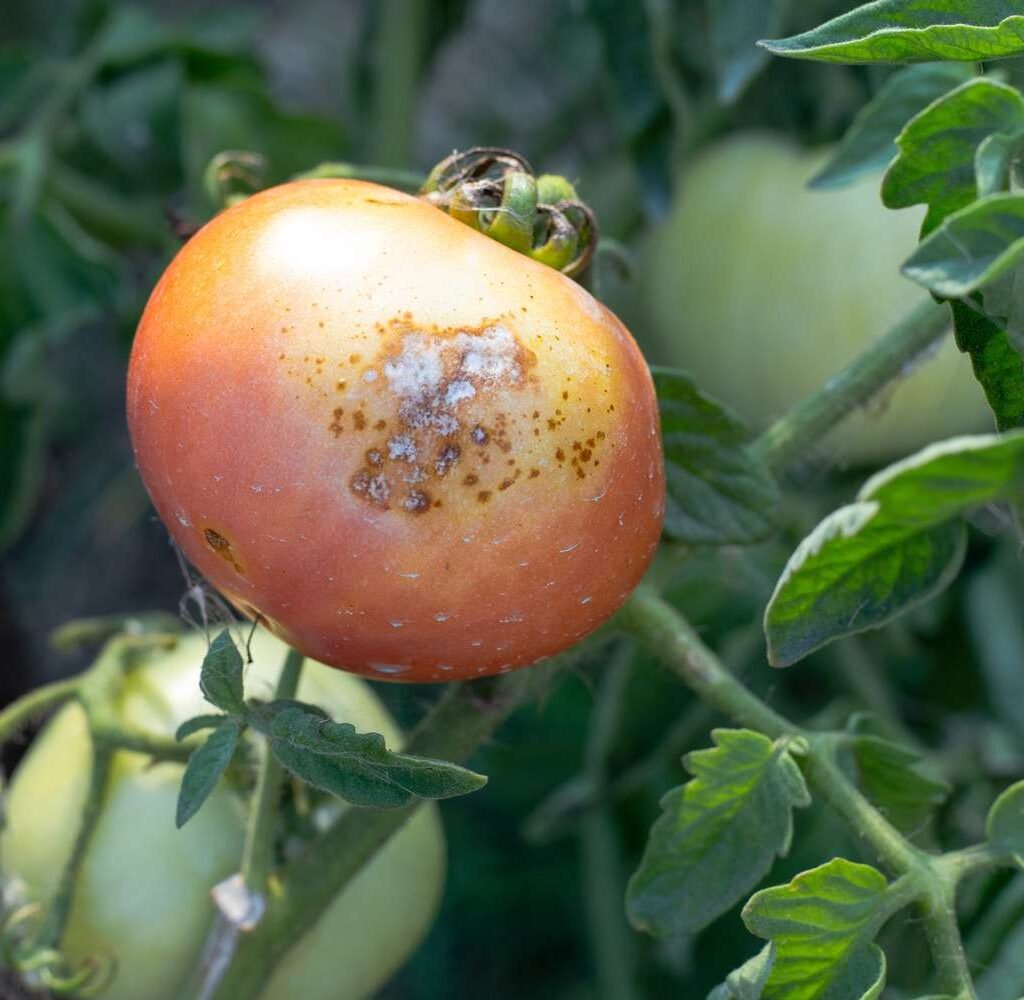
- White, powdery patches on leaves and stems.
- Leaves curl, yellow, and die back from the bottom up.
- Fruits usually remain unaffected but plant growth stalls.
Cause:
Fungal spores that spread in dry, warm environments with poor air circulation.
Natural Treatments:
- Spray milk solution: Mix 1 part milk to 2 parts water and apply weekly—it acts as a natural fungicide.
- Use neem oil to control active infections.
- Increase airflow: Space plants and prune overcrowded areas.
- Avoid high-nitrogen fertilizers, which promote soft tissue vulnerable to infection.
Bonus: Natural Preventive Strategies for All Tomato Diseases
- Rotate Crops Every Year: Avoid planting tomatoes where other nightshades (peppers, eggplants, potatoes) grew recently.
- Mulch Generously: Prevents soil-borne spores from splashing onto lower leaves.
- Water at the Base: Keep foliage dry to reduce fungal spread.
- Prune Wisely: Remove lower branches for better airflow but leave enough leaves to protect fruits.
- Feed with Compost Tea: Boosts beneficial microbes that suppress pathogens.
- Attract Beneficial Insects: Ladybugs, lacewings, and bees help maintain ecological balance.
- Keep Tools Clean: Sanitize regularly to prevent cross-contamination.
When to Remove a Plant
If more than half of your tomato plant is affected, removal is often the best choice to protect the rest of your garden. Always dispose of infected material in the trash—not the compost pile.
Final Thoughts
Tomato diseases may seem overwhelming, but most can be managed naturally with early action and preventive care. The key is observation—check your plants daily for early symptoms, maintain good soil health, and keep your garden environment balanced.
By combining organic sprays, smart gardening practices, and disease-resistant varieties, you can keep your tomatoes strong, vibrant, and productive all season long—without relying on harsh chemicals.
A healthy tomato plant doesn’t just happen—it’s cultivated through consistent, mindful care. And when you see those bright red fruits thriving despite the challenges, every ounce of effort will feel worth it.

Leave A Comment